The Stitch. The Air. The Moisture. The Proof.
Four chapters of textile physics, told the way we'd tell it to a curious grandparent. This is why snösoft™ works when flat fabric fails.
Every claim on this page comes down to one idea, and it's an old one. Hospitals have wrapped newborns in honeycomb "cellular blankets" for generations. Arctic animals have denned in snow for far longer. Both work for the same reason: structured air regulates temperature better than any solid material can. We spent two years turning that reason into a baby fabric. Here's the whole story, diagram by diagram.
The Stitch: why hexagons, of all shapes
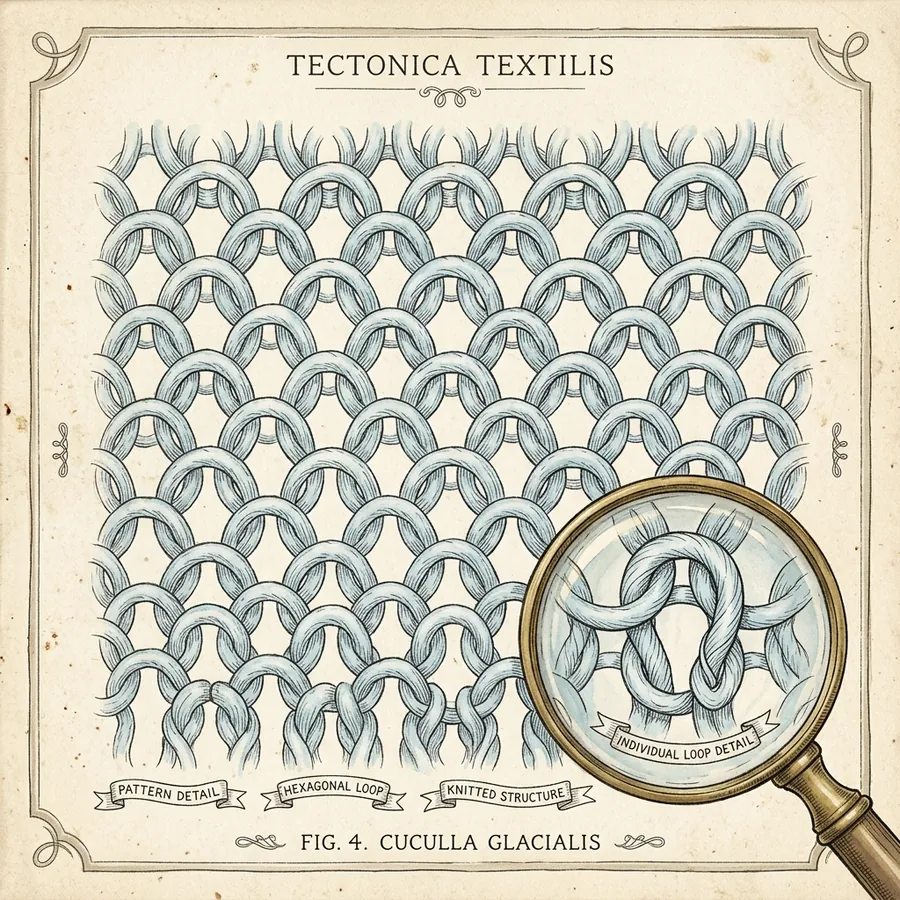
Zoom into snösoft™ and you won't find a flat sheet of yarn. You'll find thousands of tiny hexagonal cells, each one a pocket engineered to hold air.
The hexagon isn't a branding choice. It's mathematics. Geometers have known since antiquity, and formally proved in 1999, that a hexagonal grid encloses the most space with the least material of any repeating shape. It's why bees build honeycomb and why snowflakes crystallize six-sided. When we knit hexagonal cells into fabric, we get the maximum volume of trapped air for the minimum weight of yarn. More air, less fabric, on a garment that has to stay light enough for a sleeping newborn.
The Air: the best insulator you can't see
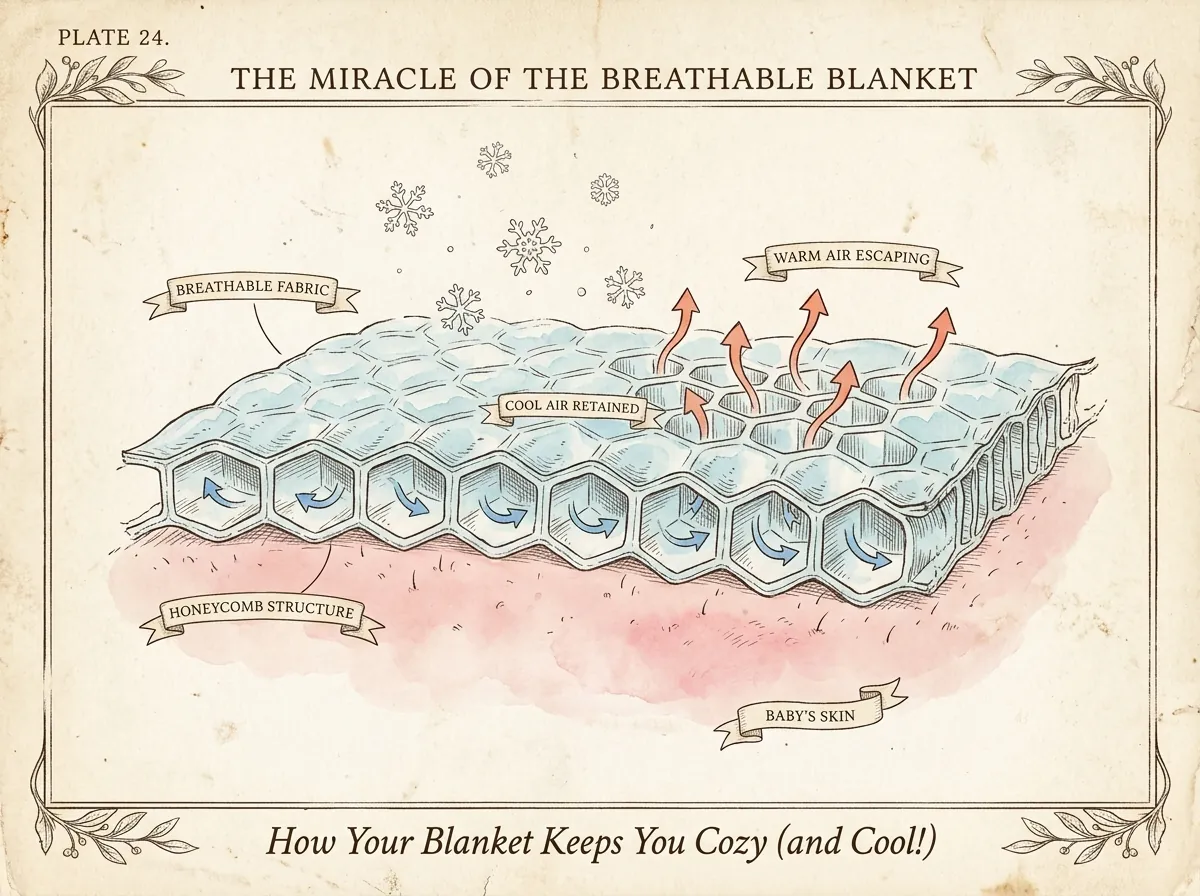
Here's the number that explains snow dens, igloos, double-glazed windows, and snösoft™ all at once: still air is one of the worst conductors of heat known. Its thermal conductivity is roughly 0.026 watts per meter-kelvin. Water conducts heat about 23 times faster. Most solids, hundreds of times faster. Trap air in small pockets where it can't circulate and you've built nature's favorite insulator.
That's the first job of every snösoft™ cell: when your baby runs cool, each hexagon holds a thin layer of body-warmed air right where it's needed.
But insulation alone would just be a fleece, and fleece is the enemy. The second job is the clever one. Because the cells are open-structured rather than sealed, warm air convects upward and out when your baby's temperature rises. Warmer air is less dense, so it lifts and escapes through the cell openings, and cooler air takes its place. A flat knit lies against the skin like a lid. An air-cell knit behaves like a chimney field: thousands of tiny vents that only work as hard as your baby's body asks them to.
The Moisture: the part bamboo marketing skips
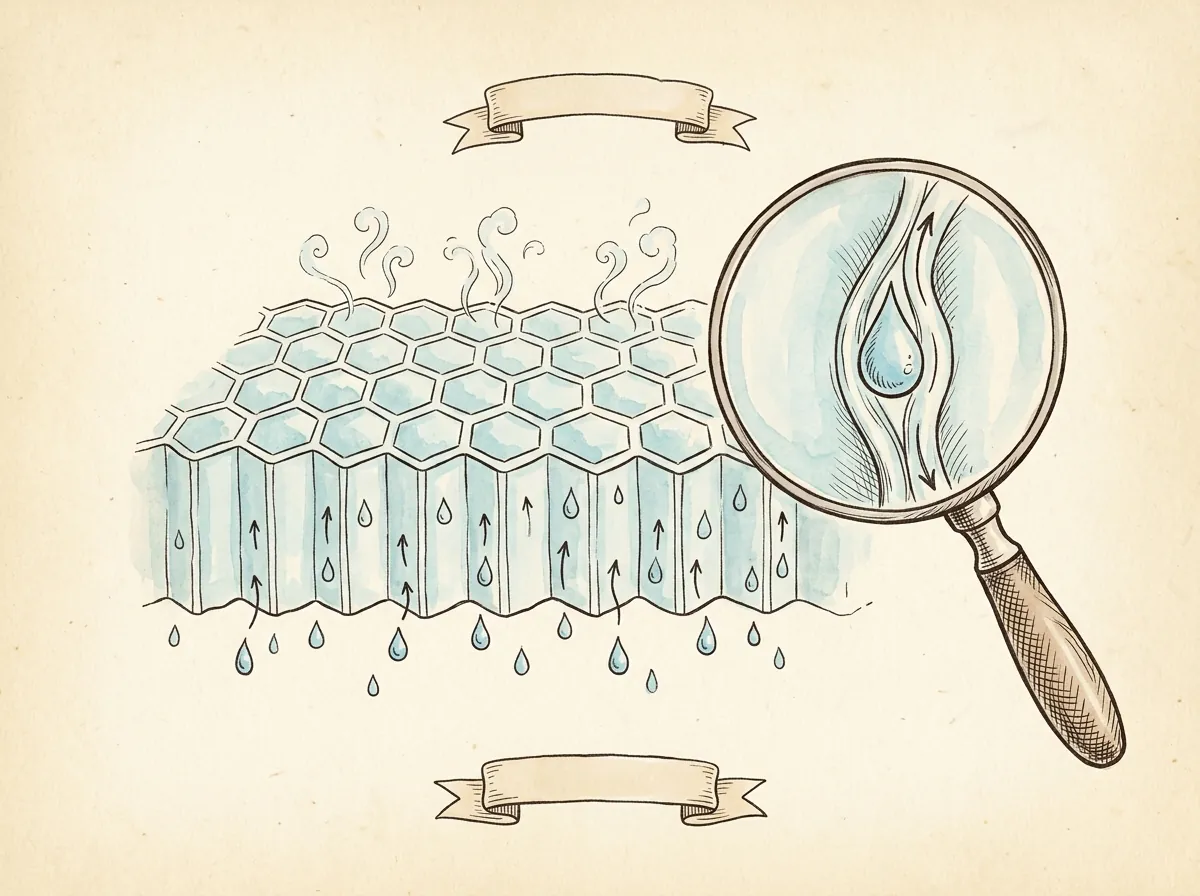
Now connect the two numbers above and you'll see why a sweaty baby wakes up. Sweat replaces the insulating air at the skin with water, and water conducts heat 23 times faster. The baby overheats, sweats, then suddenly chills as damp fabric drains their warmth, and wakes up crying at 2am. The pajamas caused both halves of the problem.
This is where the fiber choice matters as much as the structure. snösoft™ is spun from lyocell and cotton, and lyocell is one of the most moisture-capable fibers in textiles: it can absorb roughly 11 to 13 percent of its own weight in water vapor and move it along the fiber, away from skin. Polyester manages around 0.4 percent. It essentially can't absorb moisture at all, which is why polyester fleece leaves sweat sitting on the skin.
In snösoft™, the hexagonal cell walls act like wicking channels. Moisture is pulled off the skin, carried along the cell structure to the outer surface, and evaporated into the room. The insulating air layer next to your baby stays dry, which is the whole game. Dry air insulates. Wet fabric refrigerates.
The Proof: one cub, two blankets
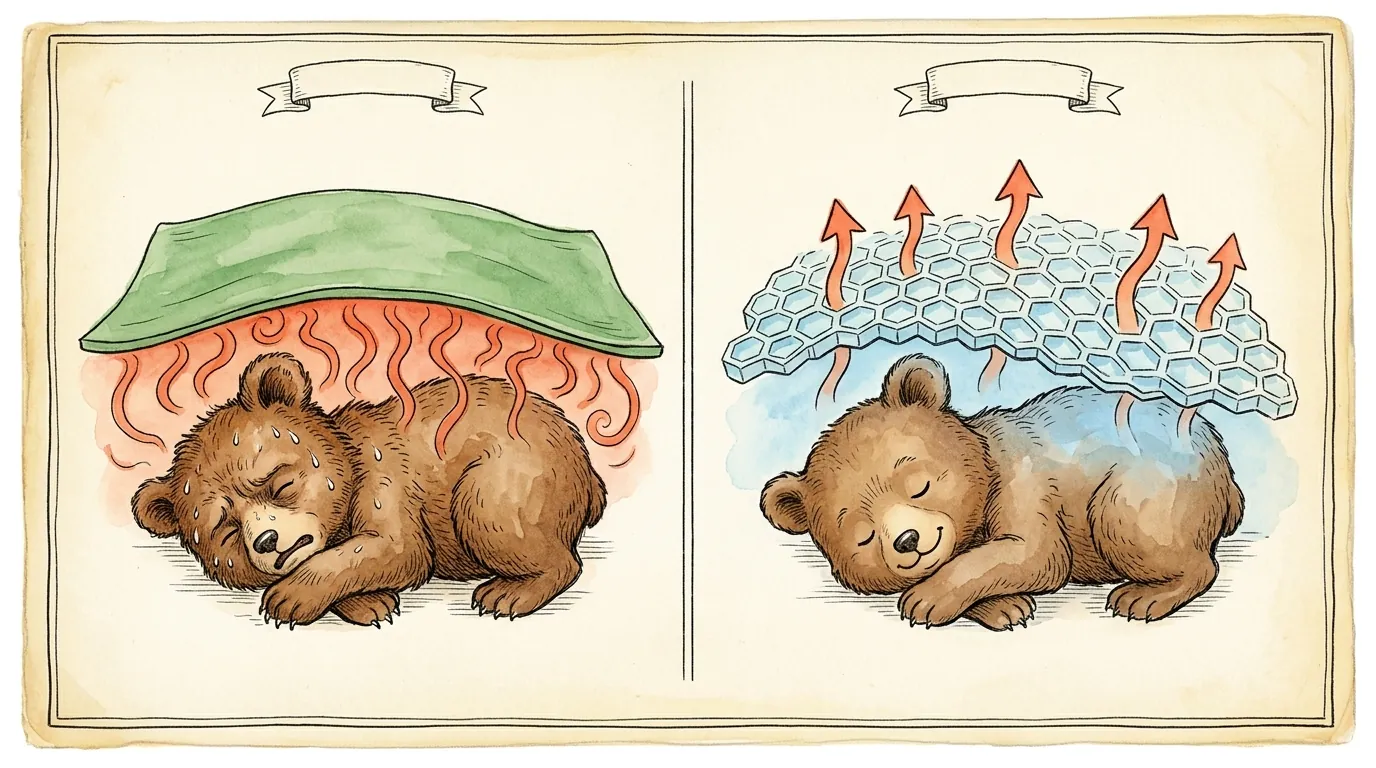
Put it all together and the comparison stops being a matter of opinion. A flat knit, whether it's bamboo viscose, jersey cotton, or polyester, has one thermal setting: whatever thickness it was made at. It cannot adapt. An air-cell knit has a working range: it insulates a cool baby and vents a warm one, and its wicking fibers keep the microclimate dry through both.
And this isn't a theory we invented. It's the same principle behind the cellular blankets that maternity wards have trusted for decades, chosen specifically because the open cell structure reduces the risk of overheating while still keeping newborns warm. We didn't discover the physics. We just refused to accept that it belonged in hospitals and not in your nursery.
| snösoft™ air-cell knit | Bamboo viscose | Jersey cotton | Polyester fleece | |
|---|---|---|---|---|
| Structured air cells | ✓ | ✗ | ✗ | ✗ |
| Adapts to body temperature | ✓ | ✗ | ✗ | ✗ |
| High-regain wicking fibers | ✓ | ✓ | ✓ | ✗ |
| No harsh viscose processing | ✓ | ✗ | ✓ | ✓ |
| Keeps skin-layer air dry | ✓ | ✗ | ✗ | ✗ |
One honest note, because honesty is a Snöbo material too: bamboo viscose fibers do wick moisture reasonably well. The problem is everything else. The flat structure, the heat-trapping cling, and the harsh chemical processing that turns bamboo into rayon. A good fiber in a bad structure still fails at 2am.
Physics is nice. Mornings are nicer. Feel the air-cell difference on your own baby.
Shop the snösoft™ Footie → Free shipping • 30-night sleep guarantee • Newborn to toddler